
Blog / Lundgren Ford Service

Blog

All Lundgren Ford Service Eveleth Ford Dealer Eveleth Ford Service Eveleth Community Lundgren Ford Dealer Ford F-150 Ford Bronco Local Area Eveleth Used Cars Ford SUVs Ford Explorer Ford lineup in Eveleth Eveleth Restaurants Ford Ranger Eveleth Shopping Ford Expedition Ford Super Duty Ford Edge Ford Escape Ford Maverick Ford Mustang

6 Signs Your Ford Needs New Tires

Tires are often neglected when it comes to routine car maintenance. Some drivers forget how important it is to regularly check tires for damage, unevenness, excessive tread wear, and improper air pressure. But if you fail to keep a close eye on your tires, you might fail to notice a worn-out tire becoming hazardous to drive on. If you ever find the following signs of tire trouble, it's time to visit your local Ford dealer for new tires. more Uneven Tires When you inspect your tires for excessive wear, make sure you look carefully from all angles. Tires can wear down unevenly on each side, and different tires can also wear down at differing rates. Uneven tire wear might be due to wheel misalignment, improper inflation, or simply the natural variations in pressure at different ends and corners of the car. When one tire or one part of a tire wears down too far, the tire and even the entire set of tires may need to be replaced. You can reduce the risk of uneven tire wear with regular tire rotation at your local dealership. Strange Vibrations When something's wrong with car tires, it often causes odd vibrations and road noises. If you ever feel strange shaking or hear unusual sounds while driving on a smooth road surface, check your tires for signs of wear and tear. Worn-Out Treads Tire treads inevitably wear down over time. It's important to keep an eye on the tread depth of your tires and replace them before they become bald and lose traction. It's usually recommended to get rid of a tire when the tread depth reaches 2/32 of an inch. Bubbling Rubber When a pothole or something else knocks against a tire, it can cause internal damage that allows air to partially escape, becoming trapped between the layers of rubber. It's unwise to drive on a tire that has a visible external bulge or bubble. Embedded Objects Tires can sometimes pick up nails, screws, and other sharp objects from the road. Any such embedded object may have caused a puncture, which will let air escape the tire and may even cause a blowout. Cracks or Cuts Too many cracks or cuts in tire rubber can put you at risk of tire failure on the road. Tiny hairline cracks may be safe to drive on, but when the cracks deepen, spread, or grow longer, consider getting a new tire. Rotate Tires Twice a Year at Your Local Ford Dealer Along with your own monthly tire inspections, regular tire rotation is an essential tire maintenance procedure. Routine rotation keeps tires from wearing down unevenly and also gives the technician a chance to inspect your tires and wheel alignment for any potential problems. Have your tires replaced or rotated today at Lundgren Motors Ford. Our family-run dealership has been serving the drivers of Minnesota for four generations.

5 Engine Problems You Should Always Repair at Your Eveleth Ford Dealer

If you're experiencing engine problems in your Ford vehicle, then the best place to go is always your Ford dealer. The dealer employs technicians who are well-versed in the ins and outs of Ford engines. They'll do a better job than any general mechanic can. more 1. The Engine Overheats If your engine overheats even once, then you should get it checked out. Various problems can cause this overheating issue. You may have a problem with your cooling system. Clogged hoses or broken spark plugs may also be the culprit. Get the problem dealt with as soon as possible, as an overheating engine can severely damage the engine's components. 2. The Vehicle Won't Start If your vehicle won't start, then it's a good idea to get it checked out. Some drivers may feel like the car is fine if it can be jumpstarted and it isn't showing any other signs that there's a problem. However, waiting too long to get the engine checked out can lead to an underlying issue getting worse. Visit the dealer, so the technicians can check your engine and battery for problems. 3. The Engine Stalls Your engine stalling is a major sign there's something wrong. When your car suddenly stalls it can put you and everybody else on the road in danger, so it's an issue you don't want to happen more than once. Head to the dealer as soon as possible to get the engine checked. 4. The Oil Level Is Dropping Rapidly Sometimes a rapidly dropping oil level indicates an oil leak. Other times, it's because the engine is consuming too much oil, signaling a problem with one of your engine's components. Damaged piston rings or leaking gas valves can lead to an overconsumption of oil by your engine. Check your oil level regularly, and if it starts dropping faster than usual, then head to the dealer. You don't want to become too low on oil while you're driving, as this can damage your engine. 5. The Parts Need Replacing If you've been to a general mechanic and found out a component in your engine needs replacing, then it's time to go to the dealer for the replacement. Many general mechanics used generic parts, as the mechanic can use these parts in vehicles from various automakers. However, OEM parts are better for your vehicle. Dealership technicians will only use OEM parts, and the technicians can easily replace any components in your vehicle that need replacing. Come straight to Lundgren Ford if you have any of the problems above. Our experienced technicians will fix your engine up and have you back out on the road soon.

How to Tell When Your Ford Needs a New Catalytic Converter

As drivers, we rarely think of how many noxious, dangerous gases our cars produce. Fortunately, most of the time, we needn't worry about them as our catalytic converters reliably turn these toxic emissions into relatively harmless gases like nitrogen, carbon dioxide, and water vapor. But if your cat starts to break down, you'll soon notice the difference. The following five signs of cat trouble should prompt you to visit your nearest Ford dealer for a cat inspection without delay. more A Stink of Rotting Eggs One of the nastiest gases your engine produces is hydrogen sulfide, which smells distinctly like rotting eggs when unfiltered. If your cat stops working properly, you'll soon catch a whiff of this unpleasant smell in your cabin. Hydrogen sulfide is poisonous to breathe, so if you smell it, open all the windows and drive straight to your nearest dealership to have your cat fixed. Ignoring this problem could be very bad for your health. Thickening Exhaust Fumes While cleaning your exhaust, the cat also lessens the volume of fumes escaping from your exhaust. If your cat stops doing this, you'll probably notice visibly thicker exhaust fumes rising behind your car. Rattling Noises Below You The precious metals that serve as a catalyst inside your cat are coated over a delicate honeycomb mesh. When a cat begins to break down from age, this mesh will often start to fall apart. An external jolt from a pothole or some other object can also sometimes cause the meshwork to break apart. This will result in a rattling sound below you as the loose parts of the mesh move around. Dropping Engine Power When cats run into trouble, they often clog up. This restricts the essential flow of fumes and air through your vehicle. The backed-up airflow will prevent sufficient oxygen from entering the engine, which causes the engine to lose power. You'll find your vehicle accelerating more slowly, idling roughly, and sometimes even stalling. Dashboard Warning Light When the cat causes engine problems like this, the various sensitive sensors in your Ford will soon detect it. You'll see the 'Check Engine' light come to life on your dashboard. If you ever see this light, have a technician diagnose the problem right away. How Your Cat Is Examined at a Ford Dealer There are various ways for a technician to check if a cat is at fault. They can run the engine and listen for rattling or use special tools to measure the build-up of heat before and after the cat. They can also detach a section of exhaust piping upwind of the cat and again run your car. If the engine's performance returns to normal, they'll know your cat is to blame. Have your cat examined and repaired today at Lundgren Motors Ford. With 96 years of experience serving the region's local Ford drivers, you can rest assured that we know Ford vehicles like the back of our hands.

Does Your Ford Need a Transmission Repair?

Are you hearing grinding sounds when you shift gears? Are your gears refusing to shift at all? It can be rather unnerving when your car runs into transmission trouble. So if you're noticing any of the following five gearbox issues, visit your nearest Ford dealer for transmission repair as soon as you can before the problem worsens. more Grinding Gears Whether you're driving an automatic or manual vehicle, grinding sounds are always a symptom of gearbox problems. With luck, the grinding will only be due to low or aging transmission fluid, which is easy enough to fix by refreshing the fluid. It might also be caused by a faulty solenoid, torque converter issues, rounded-out gears, or something else altogether. With automatic shifts, this grinding might be accompanied by strange whining noises. You'll most likely need to have a technician take a look. Stuck Gears When gearbox problems are allowed to develop, entire sets of gears can eventually stick and refuse to turn. Before it reaches this point of failure, you might notice a hesitancy in your gear changes, reduced acceleration just after you shift, or sudden high engine revving. These are all indications of serious gearbox problems. Slipping Gears Transmission problems become dangerous when gears start slipping and changing on their own. An internally damaged transmission might also take you out of gear without warning, putting you into neutral just when you need a burst of controlled speed. Leaking Fluid The cause of most transmission issues is insufficient or dirtied transmission fluid. So with regular flushing and high-quality fluid, you will likely avoid most problems. But transmissions can occasionally spring a leak in the gasket pan, torque pump, or one of the axle seals or hoses. If you ever notice gear problems, pull over and check for a reddish liquid leaking from the bottom of your car. Vibrating Clutch Clutch problems develop when the clutch disk and flywheel fail to engage or disengage properly. Both manual and automatic shifts can experience clutch problems, but these issues are more obvious with a manual shift, where you need to use a clutch pedal. A clutch fault is often due to problems with the clutch cable, which is relatively easy to repair. It might also be something more serious, like a worn-out or warped flywheel, clutch disk, or pressure plate. How Often to Flush Fluid at Your Ford Dealer You'll avoid the lion's share of transmission issues if you periodically have your fluid flushed and replaced. With automatic transmissions, this should be once every 60,000 miles of driving, and with manual shifts, once every 30,000 miles. While changing your fluid, your technician can also give your transmission a thorough examination to make sure all is well. Visit Lundgren Motors Ford today to have your transmission checked and repaired. We're a family-run dealership that's been providing for the region's drivers for almost a century.

Is Your Ford's Car AC Not Working? Visit Your Eveleth Dealership Today

No driver wants the discomfort of driving with their car AC not working. Ford AC systems are durable and will often last for the lifespan of the car. But occasional problems can always occur. If your AC breaks down, take it along to your nearest Ford dealer, who will find out which of the following six factors are to blame. more Is Your Ford's Car AC Not Working? Visit Your Eveleth Dealership Today The Refrigerant's Leaking The refrigerant flows through the AC system, cooling as it transforms from gas to liquid. If a hose, valve, or port springs a leak, there won't be enough refrigerant inside to serve its cooling purpose. The Compressor or Condenser Are Damaged These two vital components of your AC turn the refrigerant into liquid and back again into gas. Over time, either one can become clogged up, corroded, or broken. You'll need to remove the malfunctioning part and have it either cleaned or replaced. The Fans Are Clogged or Cracked Your AC is filled with all sorts of fans. The cooling fans bring air in from outside your car and can sometimes become clogged or broken by external debris. Internal fans can also break, sending pieces into the flow of refrigerant, which might further damage your AC. A Sensor's Broken Various sensors ensure the refrigerant maintains a suitable temperature and pressure. If one of these sensors breaks down, your AC will shortly begin to malfunction. The Fuse Has Blown An AC's fuse protects it from unexpected power surges. As with any electrical accessory in your vehicle, check the fuse as soon as your AC stops working. If it's blown, replace it. If the new fuse blows again, you probably have a problem with your car's electronics. Your Alternator Has Malfunctioned Any fault with the alternator will starve your AC of power. Sometimes a failed alternator has simply stopped receiving engine power because the drive belt has slipped, so check under your hood to see if this is the case. If the drive belt is in place, the alternator might have a more serious problem. How a Ford Dealer Inspects Your AC The simplest inspection of a car's AC involved a visual check and temperature check of the AC vents. If a leak is suspected, the system will be opened so a dye can be added to the colorless refrigerant substance. This dye helps identify the source of the leak. If there is no leak, the technician will use their professional judgment to select, inspect, and repair or replace any potentially damaged parts. Have your AC examined and repaired today at Lundgren Motors Ford. Since 1929, our family-owned dealership has been keeping the region's drivers happy and safe on the roads.

Does Your Ford Need a Brake Repair?

Good brakes are vital for keeping you and your Ford safe. The braking system depends on numerous parts, and parts can wear out. When you need a brake repair, your Ford dealer can help you. These are a few signs that it's time to visit us for a repair. more Signs You Need a Brake Repair at Your Ford Dealer A Bad Smell When You Brake Smelling a hot chemical smell when you apply the brakes is a sign that your brake fluid is overheating. The brake fluid provides the hydraulic pressure that enables your braking system to operate. When you hit the brakes, the pressurized fluid is forced into the brake hoses to close the brake calipers and stop your car. The pressure in the system heats the fluid, and the fluid will get hotter the longer the brakes are engaged. When you ride your brakes, the hot fluid may start to overheat. If this happens, you'll smell a foul chemical smell. We advise pulling over as soon as possible and allowing the brakes to cool. If you continue to drive, the brake fluid can boil inside the brake hoses. Once the brakes have cooled, call our service department. Our technicians will investigate and find the cause of the overheating fluid. Worn Brake Pads The brake pads fit inside the brake calipers and generate friction against the wheel rotors. This friction slows and stops your car's wheels. The pads have a material covering that generates friction. When you use the brakes, some of the covering will wear off. Once the material drops to 1/4" thick, the pads need replacement. The pad manufacturers install a warning device inside each pad. This warning device is a simple metal spike. When a pad reaches 1/4" thickness, the spike becomes visible. The next time you use your brakes, this spike will scratch against the wheel rotor with an ear-piercing screech. The spike doesn't damage the rotor, but it provides a noisy warning that your pads need to be changed ASAP. Soft Brake Pedal You expect resistance when you step on the brakes. This resistance is generated by the pressurized brake fluid. If you hit the brake and there's little or no resistance, your braking system is in trouble. The lack of resistance means that the brake system has a low level of fluid or a blockage that's preventing the fluid from building up pressure. An air bubble, for example, can form in the brake hoses. If there's an air bubble in your brake system, it will reduce the pressure in the brake system, and your brakes won't work correctly. If you have any problems with your brakes, call us right away at Lundgren Ford.

6 Reasons to Get a Tire Rotation at Your Ford Dealer

Regular tire rotations are crucial to ensure even tread wear, improve overall handling, and extend the life of your Ford's tires. Rotate your car's tires every time you get an oil change at your Ford dealer, and you'll extend the life of your tires, saving you a bundle of cash in the long run, and enjoy a smoother ride behind the wheel of your Bronco, F-150, or EcoSport. more 1. Your Tires Will Be in Good Condition Switching your car's tires around is recommended every 5,000 to 10,000 miles or when you take your vehicle for an oil change. The Ford technician will thoroughly inspect each tire for wear and damage, switch the tires to different positions, and inflate the tires to the proper pressure levels to improve fuel economy and ensure even wear. You'll find information on the rotation intervals for your specific model in your car's owner's manual. 2. Your Tires Will Wear Down Evenly Different types of cars require different rotation patterns because the front and rear tires perform different functions. Your Ford technician knows which rotation pattern to use for your specific vehicle. By repositioning the tires regularly, the tread wear is even across all four tires. 3. Your Tires Will Last Longer Repositioning your tires will ensure that the tread across all four tires wears down evenly and at the same rate, and you'll get more out of each tire. Your tires will last longer, and you will not have to replace them as often. 4. Regular Rotations Will Reduce Vibrations When you don't get your tires switched regularly, the tread on tires wears down unevenly. Uneven wear causes vibrations you will feel through your steering wheel. Over time, the vibrations will cause damage to your vehicle, and it will affect the wheel alignment and balancing. To reduce the risk of vibrations and damage to your car, ask your Mazda technician to rotate your car's tires every time you take your vehicle for an oil and filter replacement. 5. You'll Be Safer on the Road Regularly swapping the tires on your vehicle will increase your safety. Even tread wear will increase traction when accelerating, braking, and cornering, especially on wet and slippery road surfaces, ensuring you are safer behind the wheel. 6. You'll Save Money The tires on your car will last longer because they'll wear evenly and at the same rate. You will not have to buy a new set as often and save a heap of cash in the long run. With regular rotations, your tires will last longer. Best of all, you'll save money, and you and your passengers will be safer on the road. Stop at Lundgren Ford today for a rotation performed by qualified Ford technicians to ensure your tires wear evenly and experience a much smoother ride.

Does Your Ford Need an Alternator Repair?

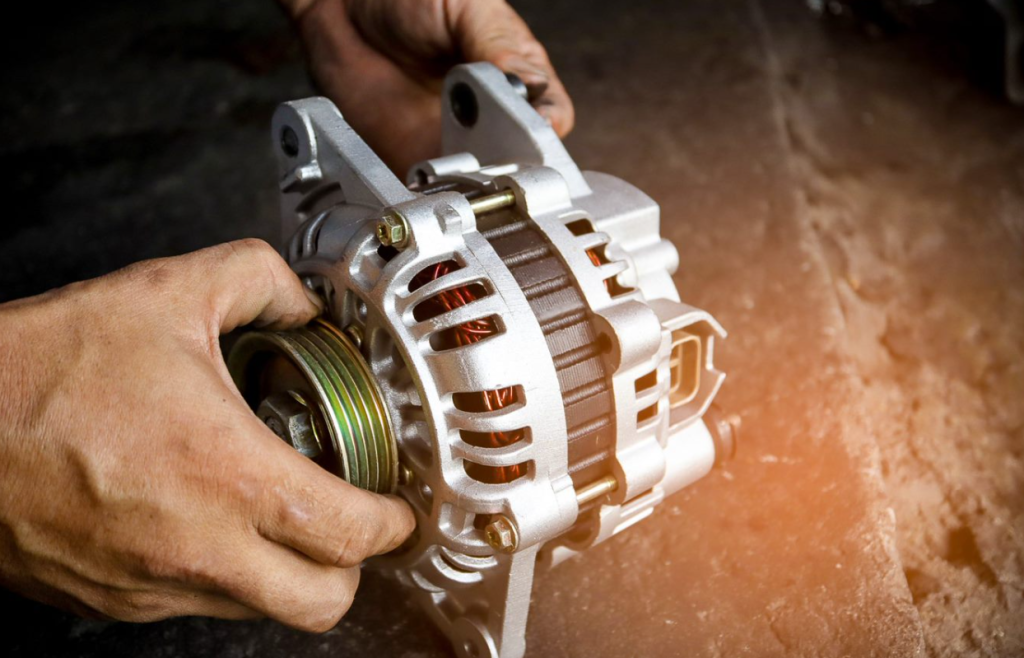
The alternator is the most important part of your Ford's electrical system. It generates the electricity needed for your car's systems and controls the flow of power to the battery. Unfortunately, like any mechanical system, your alternator can get damaged. If you live near Eveleth, MN, your local Ford dealer can help you. If you experience any problems, our technicians can fix them for you. These are a few of the signs that you may need an alternator repair. Signs You Need an Alternator Repair at Your Ford Dealer Battery Warning Light The warning lights in your Ford provide a great early warning that something is going wrong. With any problem, the earlier it's identified the quicker and easier it is to fix. in the case of our battery warning light, this light comes on if a problem is detected anywhere in your electrical system. It's important to remember that your alternator may not be the cause of the problem. An alternator problem that can trigger the light is the weaker power generation by a damaged alternator. A healthy alternator produces around 14.5 volts, which is more than sufficient for all your car's electrical demands. As the alternator gets older, it produces less power. When your alternator produces less than 13 volts, this means it failing, and the warning light will come on. more Growling and Whining Noises Engine noises are never a good sign. Your Ford engine is silent as it operates, so unusual noises immediately mean something is wrong. Several different problems with the alternator can make strange sounds, including a worn alternator belt or damaged alternator bearings. Your alternator spins on several bearings, and a damaged bearing will make growling noises as it moves. The alternator belt runs at high speed across a series of pulleys. Over time, this high-speed movement can lead to the belt running slightly off course. The constant movement of the belt can also loosen it. Either of these situations can create a whining noise due to additional strain on the belt. The belt has to be tensioned correctly for your alternator to work effectively. Dim Lights Dim lights can mean that your headlight bulbs are going to fail. It can also mean that your alternator isn't supplying enough electricity. If your alternator is wearing down, it can't supply enough power for all of your devices and accessories. To spread that limited power as far as possible, the various components will be supplied with just enough electricity to work. A headlight problem can also be caused by damaged wiring or rust in the bulb sockets. To determine the exact cause, our technicians will need to examine your headlights and your alternator. We will find the cause of the problem, and we can repair it. If the alternator is the cause of the problem, you may also notice that your headlights are failing faster than they should due to the inconsistent power supply. If you're experiencing any electrical problems, call us at Lundgren Ford.

ford oil change at Lundgren motors ford

How Long Has It Been Since Your Last Ford Oil Change?

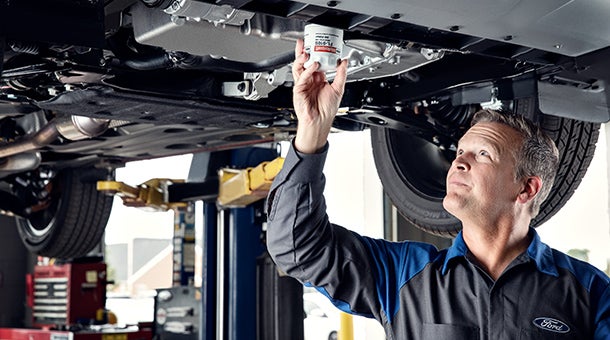
It's not unusual to miss your scheduled oil change once in a while. After all, we're all so busy with work, errands, family, and all the other distractions of modern life. But if you glance up at the sticker on your windshield and realize you're overdue, you really shouldn't put off your Ford oil change for much longer. That's when serious engine trouble can rapidly develop. How Long Has It Been Since Your Last Ford Oil Change? Change Your Oil Every 7,500 Miles Under ordinary driving conditions, a modern Ford should have its oil changed every 7,500 miles. This is the case for Ford models released since 2008. If your Ford is older than this, the recommended interval is every 5,000 miles. If you've driven too many miles since your last oil change, it's time to visit your local technician. Extreme Driving Conditions There are circumstances where your engine and oil are put under far more pressure than usual. As a result, you need to have your oil changed more frequently. These conditions include extremely hot or cold climates, heavy stop-and-go traffic, driving with extra weight such as towed trailers, and regular short trips where your engine doesn't reach its full operating temperature. more Avoid Reduced Performance The engine of your Ford is a sophisticated, meticulous machine with many moving parts. Oil is what keeps all those parts moving against each other smoothly. Oil provides essential lubrication, helps keep your engine clean, and prevents overheating. If you neglect to change your oil for too long, you'll begin to experience the following problems. Buildup of Friction With so much pressure and usage, engine oil always begins to thicken. If left unchanged, it becomes a sludge-like substance that can no longer lubricate properly. The resulting friction rapidly leads to parts breaking down. Buildup of Contaminants Engine oil contains detergents and dispersants which collect dirt and debris throughout the engine and take it all to the fuel filter. The filter is then removed and replaced during each oil change. Unless this happens often, the collected contaminants are forced back into the oil, which gradually becomes a thick, mirky sludge. Buildup of Heat The worst engine damage is caused by overheating. Smooth, clean engine oil draws heat from the engine. If you allow your oil to become dirty and thickened, it no longer serves this function and your engine will begin to overheat. At this point you face the risk of all kinds of major problems, such as a blown gasket or the entire engine seizing up. Keep Your Warranty Valid Another reason to stick to your oil change schedule is the vehicle warranty. Always check the specified frequency required by your Ford model's warranty, and stick to it. Ford drivers very rarely need to call upon their warranties for repairs or replacements, but it's always better to be safe than sorry. Head down to Lundgren Ford for an oil change today. We're a fourth-generation, family-owned dealership in Eveleth, Minnesota, and we've been looking after the region's Ford drivers since 1929. image via ford.com

Screenshot 2022-02-25 162003

3 Tips for Finding a Quality Ford Mechanic

If you don't know what to watch out for, it can be hard to know which mechanic is the best for your car. Generally, it's always good to choose a Ford mechanic who has been factory-trained and knows this type of vehicle inside and out. In Eveleth, MN, it's easy to find such a professional because there is a high-quality service center at your Ford dealer. 3 Tips for Finding a Quality Ford Mechanic in Eveleth, MN 1. Speak to Your Local Ford Dealer It isn't very challenging to find a great mechanic in your local area because there are professional technicians at your local dealership. If you've never had your car serviced, get in touch with the dealer and speak to them about your concerns and requirements. They can explain to you what kinds of repairs are offered at the service center and where their mechanics have trained. more It might be worth stopping by the dealership in person and having a look. When you arrive, you can see the center where your vehicle will be serviced and fixed, and you can speak to the mechanics directly. They'll not only reassure you that your car will be well taken care of, but they can also give you some important tips about how often you should have it checked by a professional and how to maintain it in between appointments. 2. Check What Spare Parts they Use Before signing up to use a mechanic's services, double-check what spare parts they use. If you find out that they use aftermarket or salvaged items, it's better to choose someone different. This is because such parts and accessories could damage your vehicle, since they weren't constructed specifically for your Ford model. What's more, you'll risk voiding your warranty, since the manufacturers won't be able to guarantee your car's functionality anymore. 3. Make Sure Communication Is Good A final key consideration before deciding to use a certain mechanic is the quality of communication. Find someone who will be happy to give you an honest and upfront quote about your repairs and who will tell you how long they might take. If you opt for service at our dealership, you'll know that we're only a phone call, email, or live chat message away and that we're open from 8am to 5pm on Mondays through Fridays. That way, you'll be able to reach us and speak to a representative no matter when your issue occurs. Finding a high-quality mechanic is key because it helps you to keep your car safe and in good condition for future resale. The best technicians are always the ones who have been trained to deal with Ford cars and who will use genuine spare parts. Call or message us today at Lundgren Ford to find out more and book your first appointment.

Contact Us

Fill out this form below and we'll contact you shortly

ACKNOWLEDGEMENT - By submitting your personal information, you acknowledge that: (1) you are 17 years of age or older; (2) we may contact you with offers and information about our products and services; and (3) you have read our Privacy Policy and understand your rights as a consumer.

*Required Fields